
We’ve said it before, and we’ll say it again: In Texas, air conditioning isn’t just about comfort.
During our blistering summers, it’s a matter of health and safety. At Comfy Air, we take that responsibility seriously, which is why keeping your AC system running all summer long is one of our top priorities.
Your AC can’t keep you cool without its most essential component: the compressor.
Think of it as the heart of your air conditioning system. Its job sounds simple—it pressurizes the refrigerant so cooling can happen—but without it, your AC can’t operate at all.
Below, we explain what the compressor does, how it works, where it’s located, the signs it may be failing, and what your options are for repair or replacement.
What Is an AC Compressor?
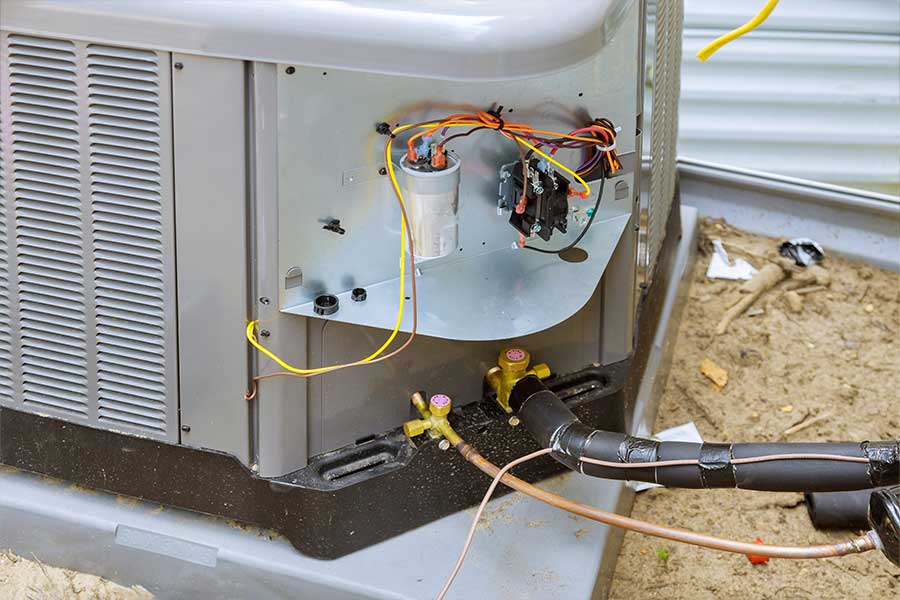
The compressor is located in the outdoor unit, the big metal box most people associate with an air conditioner.
Its job is to pressurize the refrigerant. At this stage in the cooling cycle, the refrigerant is a low pressure gas. The compressor turns it into a high pressure, high temperature gas, which is necessary for the cooling process to work.
How Does the AC Compressor Work?
There are several types of compressors, and each one works slightly differently, but they all share the same purpose: pressurizing the refrigerant so it can transfer heat out of your home.
Reciprocating Compressor
This is the most common type in residential systems.
It uses a piston to pressurize the refrigerant. They’re simple, reliable, and cost effective, which makes them ideal for most homes.
Rotary Compressor
Common in commercial buildings and larger residential complexes.
These systems use spinning, grooved rotors to compress the refrigerant. They produce less vibration, handle larger loads, and are excellent for high demand environments.
How the Compressor Fits Into the Cooling Process
Here’s a simplified version of what happens next:
-
The compressor sends hot, high pressure gas into the condenser coils.
-
A fan blows over the coils, cooling the gas and releasing heat outdoors.
-
The refrigerant condenses into a liquid.
-
It then passes through an expansion valve, which depressurizes and cools it further.
-
Finally, the cold refrigerant flows through the indoor evaporator coils, absorbing heat from your home.
The cycle repeats continuously until your home reaches the thermostat’s set temperature.
Symptoms of a Faulty AC Compressor
Compressor issues come in many forms: overheating, freezing, leaks, electrical failures, and more. Common warning signs include:
No Cool Air
A failing compressor is one of the most common causes of warm air blowing from your vents.
Loud Noises
Hissing, knocking, grinding, or rattling noises coming from the outdoor unit often indicate compressor trouble.
Short Cycling
If your AC turns on and off repeatedly—especially if this didn’t happen in earlier years—the compressor may be failing.
Other symptoms include refrigerant leaks, unusually high energy bills, and reduced system performance.
Repairing or Replacing an AC Compressor
An HVAC technician can determine whether your compressor should be repaired or replaced.
-
Failed compressors (such as those with a seized motor or major refrigerant leaks) are typically more cost effective to replace.
-
Minor issues may be repairable.
However, because compressors are one of the most expensive AC components, a failing compressor in an older unit may justify replacing the entire system.
The technicians at Comfy Air will walk you through your options to help you make the most economical and reliable decision.
Conclusion
A faulty compressor leads to higher energy costs, decreased comfort, refrigerant leaks, and eventually total system failure. If you suspect a compressor issue, contact Comfy Air immediately. We’ll diagnose the problem and get your home cooling properly again.